
Best AI for month-end close in 2026: match the tool to your bottleneck
By MacrosLM Team · Reviewed by Damira Baigozha, ex-PwC Valuation & M&A Advisory Expert
The close is one workflow, but the thing slowing yours down is specific. Here's how to find your bottleneck and the AI built to clear it.
The month-end close is the finance workflow teams most want to fix, and the benchmarks show why. APQC puts the median close at roughly 6.4 calendar days across some 2,300 organizations, and Ledge's 2025 benchmark report found only about 18% of teams finish within three business days. PwC's research on AI adoption in finance points to close-time reductions of 20 to 40% in the first year of automation. KPMG's 2026 Global AI in Finance report points the same way, finding that the strongest AI gains land in judgment-heavy work — decision quality, decision speed, forecasting accuracy — once the mechanical layer is automated.
But "AI for the close" is not one purchase. The close is a chain of very different tasks, and the tool that fixes a reconciliation bottleneck is not the one that fixes a coordination bottleneck or a reporting one. Buying the wrong category is how teams end up with software that looks impressive and changes nothing.
So the useful question is not "what's the best close tool," but "where does my close actually stall." Find your bottleneck below, and the tool built to clear it.
Match the tool to your bottleneck
"AI for the close" isn't one purchase. Pick the bottleneck that's costing you days — the tool category follows:
What's actually eating your time? Pick the bottleneck — the tool category follows.
Producing the deliverables
MacrosLM
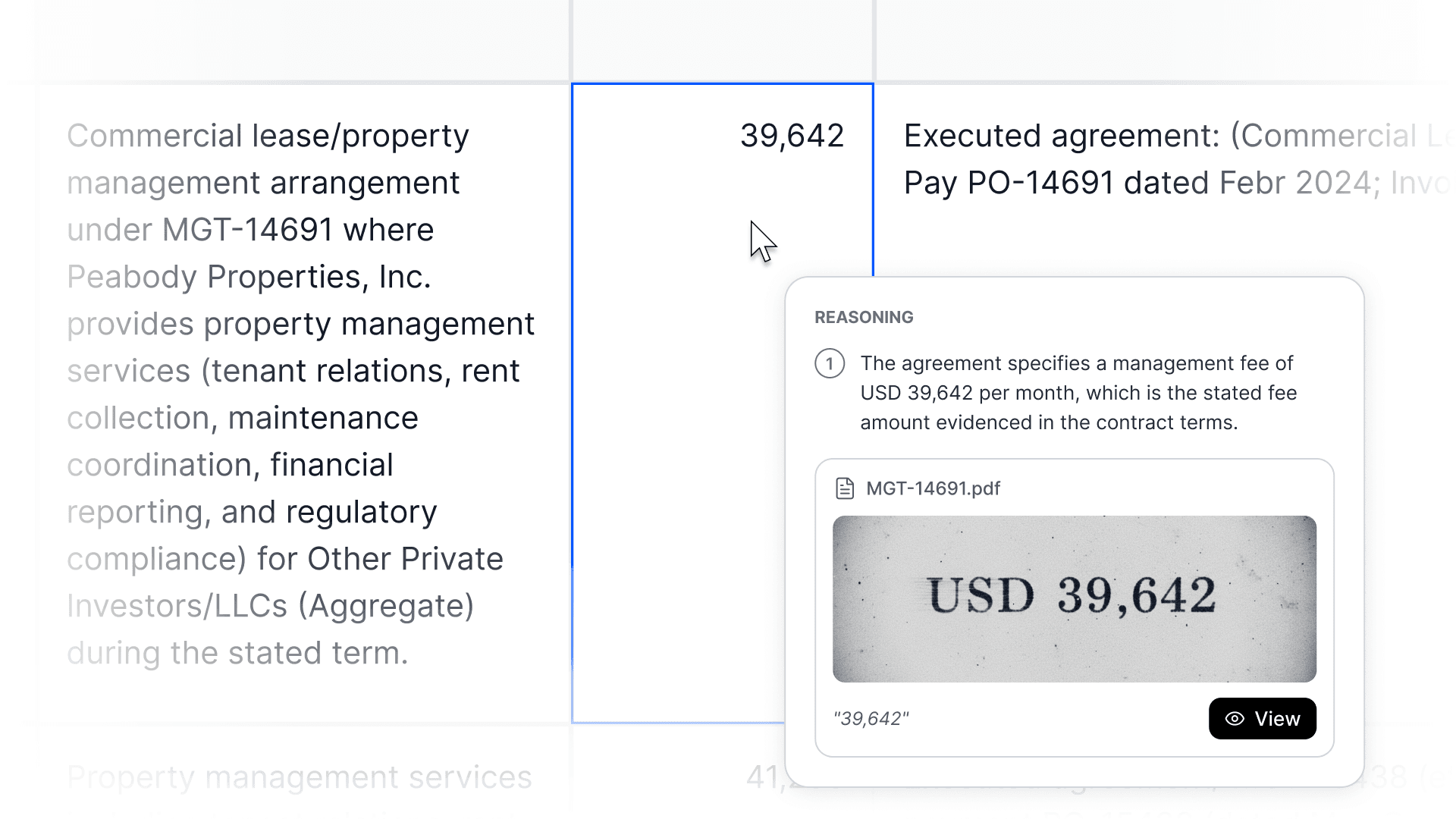
The reconciliations, journal-entry support, flux analysis, and board pack get rebuilt by hand every cycle. MacrosLM matches subledger to GL, clears exceptions, structures the trial balance into statements, and drafts the variance analysis and board pack — each figure clickable back to the ledger entry, bank line, or document behind it. You review and sign off.
MacrosLM — performs the close and sources the work
Disclosure: MacrosLM is our own product. We've aimed to describe every alternative fairly and accurately, but read this comparison knowing where we sit.
Best for: producing the finished, sourced deliverables of the close — reconciliations, journal-entry support, flux analysis, and the board pack — with every figure traced back to its support.
For many teams this is the real drag: the workpapers get rebuilt by hand every cycle. MacrosLM is the multi-agentic AI workspace that does that work and sources it — its Reconciliations agent matches subledger to GL and clears exceptions, the General Ledger & Trial Balance agent structures the raw ledger into statements, and the reporting agents build the variance analysis and the board pack. Click any figure and see the exact ledger entry, bank line, or document behind it — the trail that keeps the close review-ready and audit-ready.
The capability that changes the shape of the close is scheduling: recurring procedures re-run daily, weekly, or monthly, per your instructions, so reconciliations and workpapers stay current through the month instead of being rebuilt at period-end. That's what moves a team from a periodic close toward a continuous one.
One honest limit: MacrosLM isn't the close-management system of record. The checklist, task-tracking, controls, and sign-off workflow that FloQast and the enterprise R2R platforms own is a different job — MacrosLM does and sources the accounting work, and the review and sign-off stay with the accountant. Many teams pair the two.
Best for: controllers and accounting teams who want the preparation done and sourced, ready to review, not just tracked. Judgment and sign-off stay with the accountant. Try it on your own close →
Where each tool sits across the close
The tools, by bottleneck
BlackLine and Trintech — reconciliation at scale
The enterprise standard for high-volume matching. BlackLine has the deepest matching engine and the widest ERP connector library, and in April 2026 announced an agentic financial-operations model aimed at governance and trust for AI in the close. Trintech's Cadency competes on hard cases — partial payments, multi-currency — in complex, regulated environments. Best for: large, multi-entity groups with serious reconciliation volume. Cons: heavy platforms, with implementation to match.
FloQast and Numeric — coordination and visibility
FloQast, built by accountants, approaches the close through management: close dashboards, reconciliation tracking, and checklist-driven workflows, with AI variance analysis layered in. Numeric is the AI-native challenger, pairing close management with automated reconciliations, cash matching, and AI-drafted flux. Best for: teams whose problem is orchestration and status-chasing, not the accounting work itself. Cons: they organize and control the close; much of the accounting can still sit in spreadsheets underneath.
HighRadius — autonomous R2R
HighRadius leans furthest into autonomous agents across the record-to-report cycle, with an R2R agent builder aimed at end-to-end automation for mid-market and enterprise finance. Best for: teams that want AI agents driving reconciliations and journal work, not just tracking them. Cons: a platform commitment, strongest inside its broader order-to-cash and treasury suite.
Sage Intacct and OneStream — ERP and consolidation
Often the cheapest win is capability you already own. Sage Intacct has built-in continuous-close features; OneStream folds consolidation and close into one platform for larger multi-entity groups; Datarails adds consolidation and reporting on top of Excel for teams that won't leave the grid. Best for: switching on close capability inside the system of record you already run. Cons: the close is only as strong as the platform's native tooling for it.
The shift underneath: continuous close
There's a structural change beneath all of this — from a periodic close to a continuous one. A periodic close crams everything into the days after period-end; a continuous close runs reconciliations and matching through the month, so period-end becomes review rather than a marathon. It's why scheduling and continuous automation matter more than raw speed on any single task: MacrosLM re-runs the reconciliations and workpapers on your cadence, and Numeric and HighRadius run continuous matching, each chipping the work out of the crunch. The distinction worth remembering is between a better to-do list and something that does the tasks on it.
What to look for in any close tool
- A traceable trail. Every reconciliation, journal entry, and variance explanation should link to its support, which is what keeps the close audit-ready as AI does more of the preparation.
- Deep ERP integration. The close can't finish faster than its slowest data source, so integration with your ERP and upstream systems is what enables continuous work.
- Clean exception handling. AI should clear the routine matches and route only genuine exceptions to people. The quality of exception handling separates tools that save time from ones that add review burden.
- Human review and sign-off. The best tools automate the preparation and keep approval, judgment, and audit sign-off with the accountant.
How to choose
Start with where your close stalls. Rebuilding the deliverables by hand → MacrosLM (performs the work and sources it). Reconciliation volume across systems → BlackLine, Trintech, or HighRadius. Coordination and status-chasing → FloQast or Numeric. An ERP that leaves the work in spreadsheets → Sage Intacct, OneStream, or Datarails. Moving off the period-end crunch → the scheduled/continuous tools (MacrosLM, Numeric, HighRadius). Most teams run more than one layer — a platform to track the close and something to do and source the work inside it — then test on a real (non-confidential) period and judge the output on whether it's sourced, accurate, and review-ready.
Bottom line
There is no single best AI for month-end close, because the tools clear different bottlenecks and split into two kinds: those that coordinate the close and those that perform it. Reconciliation engines (BlackLine, Trintech) and autonomous R2R (HighRadius) do high-volume matching; close-management platforms (FloQast, Numeric) organize and control the process; ERPs and consolidation tools (Sage Intacct, OneStream, Datarails) may already hold capability you can switch on; and an agentic workspace like MacrosLM performs the accounting work, sources every figure, and re-runs it on a schedule toward a continuous close. Find where your close actually stalls, match the category to it, and test on a real cycle before you buy.
Sources
- APQC — Cycle Time to Perform the Monthly Close — the ~2,300-organization benchmark behind the median close-time figure.
- Ledge — The State of Month-End Close in 2025 — source for the 18%-finish-in-three-days figure.
- PwC — How AI agents help drive a new finance operating model — source for the 20-40% close-time reduction from AI/automation.
- KPMG — 2026 Global AI in Finance Report — survey of 1,013 finance leaders behind the judgment-heavy-gains finding.
This article reflects the finance-technology landscape as of 2026, which changes quickly. Benchmarks are drawn from the published studies above. Nothing here is a substitute for professional accounting judgment.
Frequently asked questions
- What is the best AI for month-end close?
- There's no single best tool, because they clear different bottlenecks. Reconciliation engines like BlackLine handle high-volume matching; coordination platforms like FloQast organize and track the close; ERPs like Sage Intacct may already have continuous-close capability; and agentic workspaces like MacrosLM produce the finished, sourced deliverables. Find where your close stalls and match the category to it.
- Why is my month-end close slow?
- Usually one specific bottleneck, not the whole workflow. The common ones are producing the deliverables (reconciliations, flux analysis, board pack) by hand each cycle, reconciliation volume across systems, coordination and status-chasing, or an ERP that leaves the work in spreadsheets. Diagnosing which one is yours is the first step to fixing it.
- What's the difference between coordinating the close and performing it?
- Some tools coordinate the close and some perform it. Coordination platforms like FloQast improve visibility and control but leave the accounting in spreadsheets; reconciliation engines like BlackLine and agentic workspaces like MacrosLM do the work itself — matching, preparing, and producing the deliverables. It's the difference between a better to-do list and something that does the tasks on it.
- What is a continuous close?
- A periodic close crams everything into the days after period-end; a continuous close runs reconciliations and matching through the month so period-end becomes review rather than a marathon. A three-day close isn't an eight-day close done faster — it's a differently structured one, which is why scheduling and continuous automation matter more than raw speed on any single task.
Reviewed by Damira Baigozha
ex-PwC Valuation & M&A Advisory Expert. Written by the MacrosLM editorial team.
View profile →